Six losses, one burn scar
A wildfire does not just kill what it touches. It rewrites the land: the habitat that species depend on, the soil that holds water, the waterways that run clean — and the carbon stored in the ground itself. In 2022 alone, 20,362 hectares of UK land were consumed by wildfire[1]; in 2025, the record year, that figure doubled to 47,879 hectares[2].
- 01 Habitat destruction Moorland, heathland, woodland and grassland are destroyed or severely damaged. Many species lose the place they need to hide, nest or breed, and recovery can take decades — or never come at all.
- 02 Loss of wildlife Birds, insects, mammals and rare plants are killed outright or displaced. Soil communities that take years to build up are incinerated, and pollinators are wiped out along with the flowers they depend on.
- 03 Soil & erosion Burned ground loses its structure and its ability to hold water. When rain finally comes, exposed soil washes away, taking nutrients with it and triggering landslides on steep moorland.
- 04 Waterway pollution Ash, char and burnt chemicals wash into rivers, streams and reservoirs. This degrades water quality for people and wildlife alike — and strains the very water systems we rely on.
- 05 Air & health Smoke carries fine particulates and toxic gases that travel far beyond the fire. It worsens asthma, heart and lung disease, and the effects are felt in towns and cities hundreds of miles away.
- 06 A vicious carbon loop Wildfire releases the carbon stored in plants and peat back into the air. That extra CO2 drives more warming, which dries more land, which grows more fuel — a self-reinforcing cycle.
A wildfire does not just burn a patch of ground. It borrows against the future of the whole catchment — and the water bill comes due every dry summer after.
The hidden ledger — ecology, hydrology and carbon, all in one burnWhy UK moorland is a special case
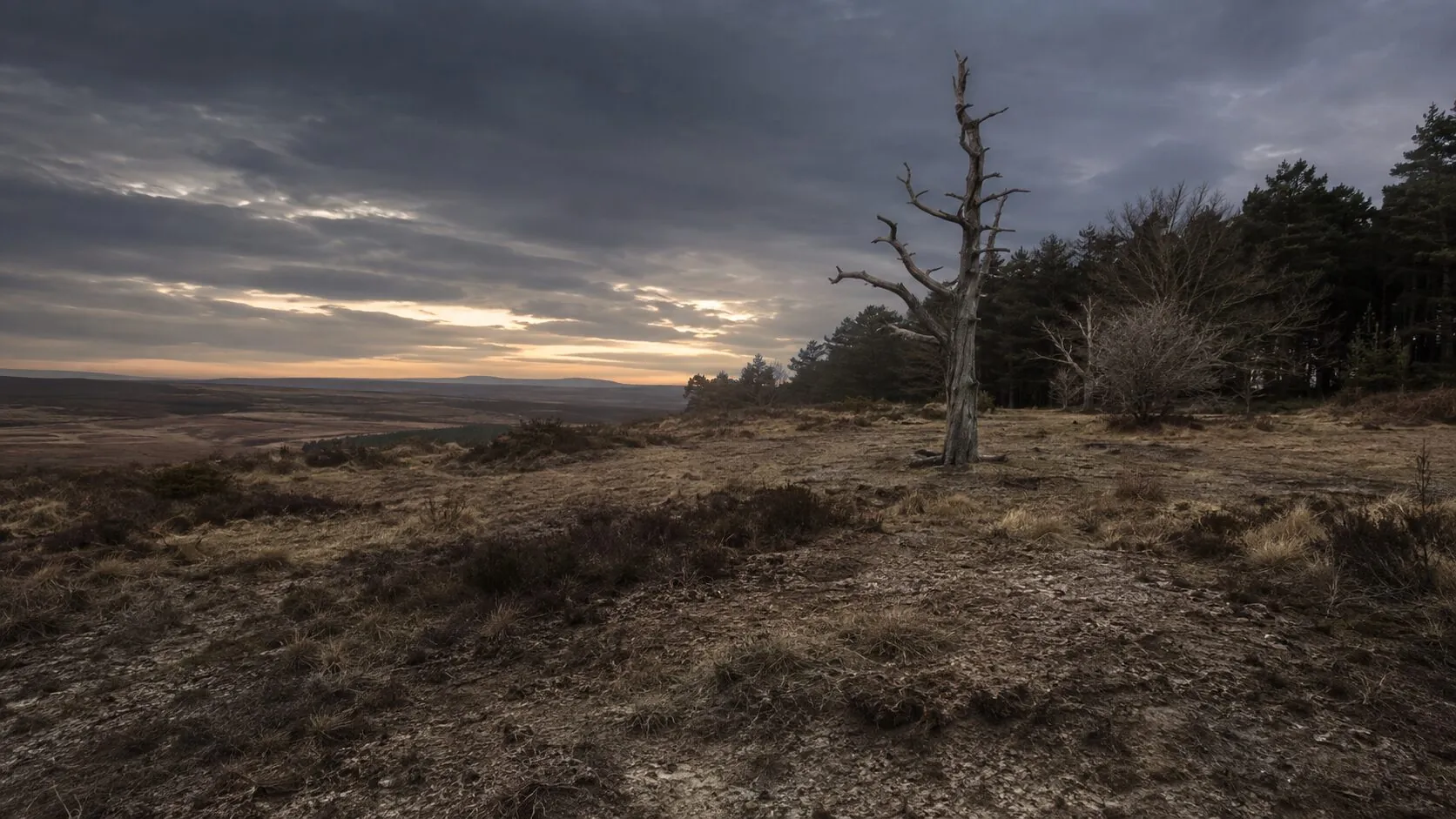
The UK’s moorland and upland heath hold deep deposits of peat — a carbon store built over thousands of years at a rate of roughly 1 mm per century [5], and one of the most important carbon reservoirs in the country. The 2019 Flow Country fire in Sutherland burned 8,100 hectares and released 700,000 tonnes of CO2e — an amount that doubled Scotland’s daily carbon emissions for six days[3].
When it burns, a peat fire can smoulder deep below the surface for weeks, releasing carbon and destroying the ground that holds water for whole catchments. The Marsden Moor fire of April 2019 — started by a barbecue — consumed 3,700 hectares of moorland and destroyed over £200,000 worth of habitat restoration, imperilling endangered curlew nesting sites [4]. That is why a ‘small’ moorland fire is so hard to fully extinguish, and why it matters to the water cycle as much as to the land.
Intact moorland and peat act like a sponge, storing rain and releasing it slowly. Burned or drained peat loses that function — contributing to both floods in winter and droughts in summer. Less stored water means lower river flows in exactly the dry summers when fire risk is highest. The UK holds an estimated 10–15% of the world’s moorlands [6], making its peatlands a globally significant carbon store that is disproportionately vulnerable.
- CycleThe feedback loopClimate change dries the peat and lengthens the fire-weather season. More fire releases more carbon, which drives more warming. Drier peat is easier to ignite, so the cycle accelerates.
- FixWhy it persists — and how to stop itProtecting and rewetting peat is one of the best climate and water investments available: it stores carbon, slows runoff, holds water in dry summers and removes the fuel that makes moorland fires so hard to beat.
Water keeps fuel wet and crews supplied
Keeping water in the land and in the system is what keeps fuel from drying to the point of ignition, and what gives fire crews the supply they need to fight it. Responsible water use is part of the ecological defence — not a small add-on.